Response to the prompt:
I do agree with the Vanity fair article's view of the American Dream. If you look at America during the early 20th Century, you'll be looking at a nation of opportunity for immigrants, made by immigrants. Back then, the wealth and prosperity of all citizens was in the highest regards by the Government. But, if you look at America now, the decades that followed the 20th Century, showed a change in the Governments highest regard, from "the wealth and prosperity of all citizens," to the wealth and prosperity, of all rich citizens. due to this shift in priority, the American for the vast majority, is dying.

Precis Papers:
Throughout the course of the year, we are allowed to pick a syndicated columnist, and in 5 papers, analyze their rhetorical strategies. For this quarter, the Columnist that I selected was Leonard Pitts Jr. For Pitts Jr, I noticed that he constantly used 2 strategies, those being listing and logos. Within his column"Is 'Huh' a better strategy than 'Duh,' where he speaks about Gary Johnson, the Presidential nominee, for the Green Party's cluelessness towards America's greatest issues, Pitts, uses listing to pile together other hilarious things that candidates have said, to show his reader, that Gary Johnson isn't the biggest idiot that has run for office. Within his column, "Not every Guy is a piece of scum," Pitts Jr. speaks about the vulgar remarks about women that were made by Donald Trump, the Republican Presidential nominee, and Billy Bush. Within the column, he uses the logic of accusing all men of being "scum" because of the actions of only two, to show that not all men are "scum," just because a few men said some bad things about women.

"The Great Gatsby":
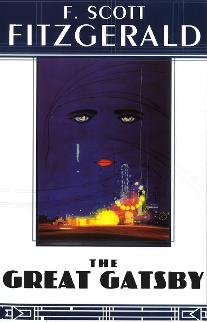
The "Great Gatsby" shows a perspective of the American Dream. within the book, the story of a man named Gatsby unfolds before the readers eyes. Gatsby grew up a poor child, but with hard work and a dream, he made it into the upper echelons of American society. Even with all of these achievements, he wanted more. After finally meeting a girl from his past, Daisy, Gatsby devotes his life from that point on, to getting her back, but the only problem with that, is that she is with a man named Tom. Now, all of the readers can tell that Daisy, does in fact, still have feelings for Gatsby, but she will not leave Tom, for him. The moral of all of this is to show that, the reason why the American Dream is so far out of reach, is because those who almost achieve it, always strive for more than they can get.
Jefferson-Stanton Rhetorical Analysis Essay:
Within my next formal paper, I will strive to improve all aspects of my writing. With this essay, I used all of the skills at my disposal in regards to writing, and for the next paper, I will do the same. For one thing, I can promise, that my next formal paper, will be better than this one.
Quarter 1 Timed Write:
Under Construction
Quarter 1 Reflection:
When I think back to Quarter 1, I can only think about hard work. I have been in school for years, but this quarter in itself, was the hardest course far. Within the course, I did 3 timed writes, a formal paper, 5 precis papers, and much more. In terms of development, I have gained a tremendous amount of skill in rhetorical analysis and other important skills related to English. All I can say about this quarter to be honest is that through it's trials and tribulations, I have learned so much, and hope to learn so much more.

Quarter 2:
"Their Eyes Were Watching God" - By Zora Neale Hurston:
The novel for this quarter, was"Their Eyes Were Watching God" - by Zora Neale Hurston, a very famous and notable African - American author. Within this specific book, we follow the narratives (as the story recalls) of a woman named "Janie Crawford," through her 3 relationships. Her first marriage, was arranged by her grand-mother, and to a man named Logan Killicks, a farmer. Her second was to a man named Joe Starks, the Mayor of a town called Eatonville; Florida's first all black city. Her final relationship, was with a man about 12 years her Junior named Tea Cake. One thing that all of these relationships have in common, is the fact that they all ended in disaster, leading me to my subject matter of irony, within these next paragraphs, I will speak about Hurston's use of irony throughout the novel.
To give more context, I will start off by speaking about the marriages that Janie went through. In her first marriage which was arranged by her grand mother, to a man named Logan Killicks; this was set up by her grandmother. Within this marriage, Logan is very dependable, but is uninspired and at some points abusive, this was a very short marriage, because Janie left Logan for a more dapper gentleman named Joe Starks, who is the Mayor of the first African American City in Florida: Eatonsville. While there, Janie lives the "mayors wife" life, and enjoys high class living, but just like the marriage before, there were problems: Joe, had a very conservative view point as to the role of Women, often silencing Janie, when she tries to speak her opinion, and close to Joe's death, he tries to help himself cope with growing older, by speaking about how Janie is acting "too young." As Joe is about to die, Janie breaks into his room and speaks her mind to him. After the end of this second marriage, Janie lives the widow life, until she meets the young exuberant Tea Cake, with whom she finds "true love," even though he is 12 years her Junior. Upon the beginning of their relationship there is a tension between the two caused by jealousy, which is overlooked during the first stage of the relationship. They move to the Everglades and live a pretty nice life, up until Tea cake is bitten by a rabid dog, trying to protect janie. As time goes along, the jealousy that was overlooked at the start of their relationship, begins to swell up in Tea Cake's mind, causing him to go crazy one night, in turn forcing Janie to shoot and kill him. Ironic right?
Janie's obsession with "love" came from when she was a child. She saw a bee on a flower, and love is what swarmed her mind. The reason that I spoke about her relationships, is because it is ironic how they all ended and began. Through the end of each marriage, Janie moves on to the next man believing that they are better than the man before, but each time the relationship ends worse than the one before, she leaves one man, watches the man after die, and then shoots the last. This irony here is insane, she goes from a young girl thinking about love and wanting to experience it, to having three failed relationships. Ironic indeed.

Q2 Columnists and Precis Papers:
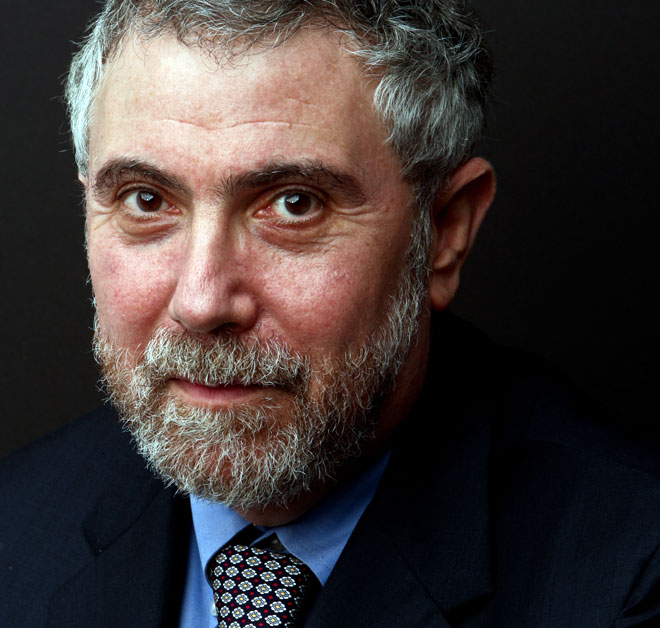
This quarter, my syndicated columnist, was Paul Krugman. Through my understanding of his writing, his most used rhetorical devices, seem to be irony and sarcasm. I read 5 of his columns and in 3 of them, irony, and sarcasm were the most used rhetoric. Irony is defined as the expression of one's meaning by using language that normally signifies the opposite, typically for humorous or emphatic effect (www.Google.com), and sarcasm is defined as the use of irony to mock or convey contempt (www.Google.com). The 3 columns that had irony and sarcasm stand out as the alphas of rhetorical devices were: "The Medicare Killers," "The Tainted Election," and "Trump and Pruitt Will Make America Gasp Again." To compare and give better insight, I will summarize each of the 3 columns and explain how the uses of irony and sarcasm are executed. "The Medicare Killers," speaks about (then President-elect) Donald Trump has made a lot of entitlement promises, but most likely will go back on his word, sarcasm is incorporated through his tone, and irony is found in the main idea of the column, the most ironic thing that can be found is someone making a promise, and then going back on that promise, and making things worse. "The Tainted Election," speaks about the the obvious but often ambiguously overlooked hacking of the U.S elections by the Russian Government last year, and the re-opening of Hillary Clinton's email scandal case, right before the elections, the sarcasm and irony are found in both the tone and main idea. "Trump and Pruitt will Make America Gasp Again," speaks about how Trump's pick for head of the EPA; Scott Pruitt, will not have a positive effect on the environment, the irony and sarcasm can be found in the main idea.
When looking at "Trump And Pruitt Will Make America Gasp Again," the reader will notice that irony and sarcasm are used to advance the plot and argument in a very precise manner, at first, Krugman, speaks about how good of an effect, environmental regulations over the past few years have had on the planet, but then he goes into saying how easily those effects will be reversed by Scott Pruitt, when he becomes the head of the EPA. To add analysis, the reader can find it very ironic if looking at what has and will come to happen, first the environment got better and better, and then the man who is expected to continue on that legacy of good policies, will actually oppose that legacy, very ironic if you ask me, in terms of sarcasm, Pruitt uses it in his opening sentence, he states "He can, for example, bring us back to the days when, all too often, the air wasn’t safe to breathe. And he’s made a good start by selecting Scott Pruitt, a harsh foe of pollution regulation, to head the Environmental Protection Agency. Make America gasp again!." Next up is "The Tainted Election" which speaks about the issue of Russians hacking the 2016 Presidential election, which has been obvious for some months now, and also speaks about the FBI’s investigation into Hillary Clinton’s emails right before the election." Within this column, he has a tone that can be deemed sarcastic, and a main idea that is ironic, reading into the column, you will see that he speaks about how Clinton is up in the polls, and then out of nowhere, ironically, an investigation is reopened to look into her scandalous emails, very ironic right?
The next article, will be "The Medicare Killers," which speaks about the campaign promises regarding entitlements, like medicare, that the then President - elect, would most likely end up going back on when he entered the Oval Office. In one of his opening lines, he stated, that "First, the attack on Medicare will be one of the most blatant violations of a campaign promise in history." Now you may be asking yourself, how is this ironic? Well, as I stated earlier, nothing can be more ironic than someone going back on a promise, especially one as serious as entitlements. Throughout the course of this quarter, I had the pleasure of reading the articles of Paul Krugman, all of which I enjoyed a lot. His use of irony was both entertaining, and a learning experience.
Q2 Synthesis Paper: Synthesis Essay:

The picture above is from www.shutterstock.com
Q2 reflection:
Looking back on this quarter, I have to say, it went by pretty fast, the tremendous work load of this class, no doubt contributed to the hasty passing of time. we did a lot of assignments this quarter, and from those assignments, I learned to better structure an argument, how to write in the MLA format, and do citations in the MLA format, how to properly cite, etc. from the numerous assignments that we had, I have to say that the one that was the most fun for me, was the end of Quarter formal synthesis paper. Even though it took a lot of hard work and effort leading up to the final draft, it was a major learning experience. What I gained most from this assignment, was the ability to properly write a synthesis essay, and how to clearly present my argument within one.
One assignment I wish that we had skipped, was gathering sources. Although I liked the essay, I felt that if I had found the sources for it on my own, then i would have been able to deliver my argument in a better and more organized way. The thing I'm looking forward to in Quarter 3 is the essay, as I do every quarter, but what I am dreading, is the massive heap of work that is to come within this quarter I don't have any "learning goals" for the 3rd quarter, but I hope to learn as much as i can!
